Skip to content
Rai / Pujol
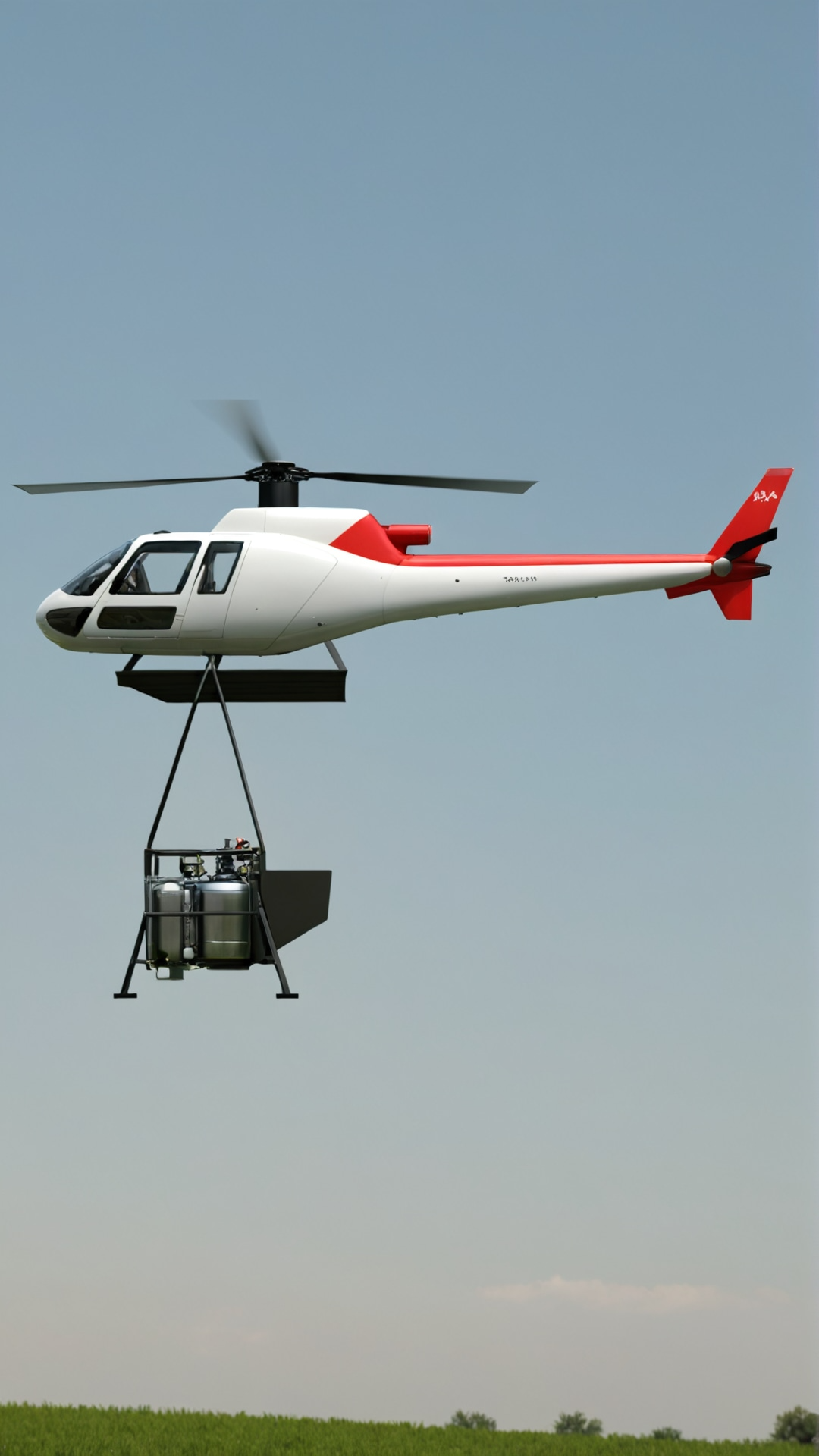
3D render of a white and red helicopter sling-loading the Helioss tank and nozzle frame
SHOT 01Helioss under a light utility helicopter: concept render of the stage-one sling-load platform.

Doc RP-HELIOSS

Helioss

Helicopter Ionized Suppression System

Ten times the coverage per liter. Zero toxicity on the ground.

  • Patented
  • Functional H1 prototype
  • Stage two: autonomous drones

The Problem

Aerial firefighting still drops ammonium polyphosphate, the Phos-Chek family of retardants. Phos-Chek should never be used. The chemistry is toxic, persists after the fire is out, and loads watersheds and soil. That is not a trade-off worth making.

The second problem is delivery. Uncharged droplets follow air, not vegetation. A large fraction misses the fuel, so crews dump more volume to make up the miss. Bad chemistry, then more of it, because the spray does not wrap the thing it has to wet.

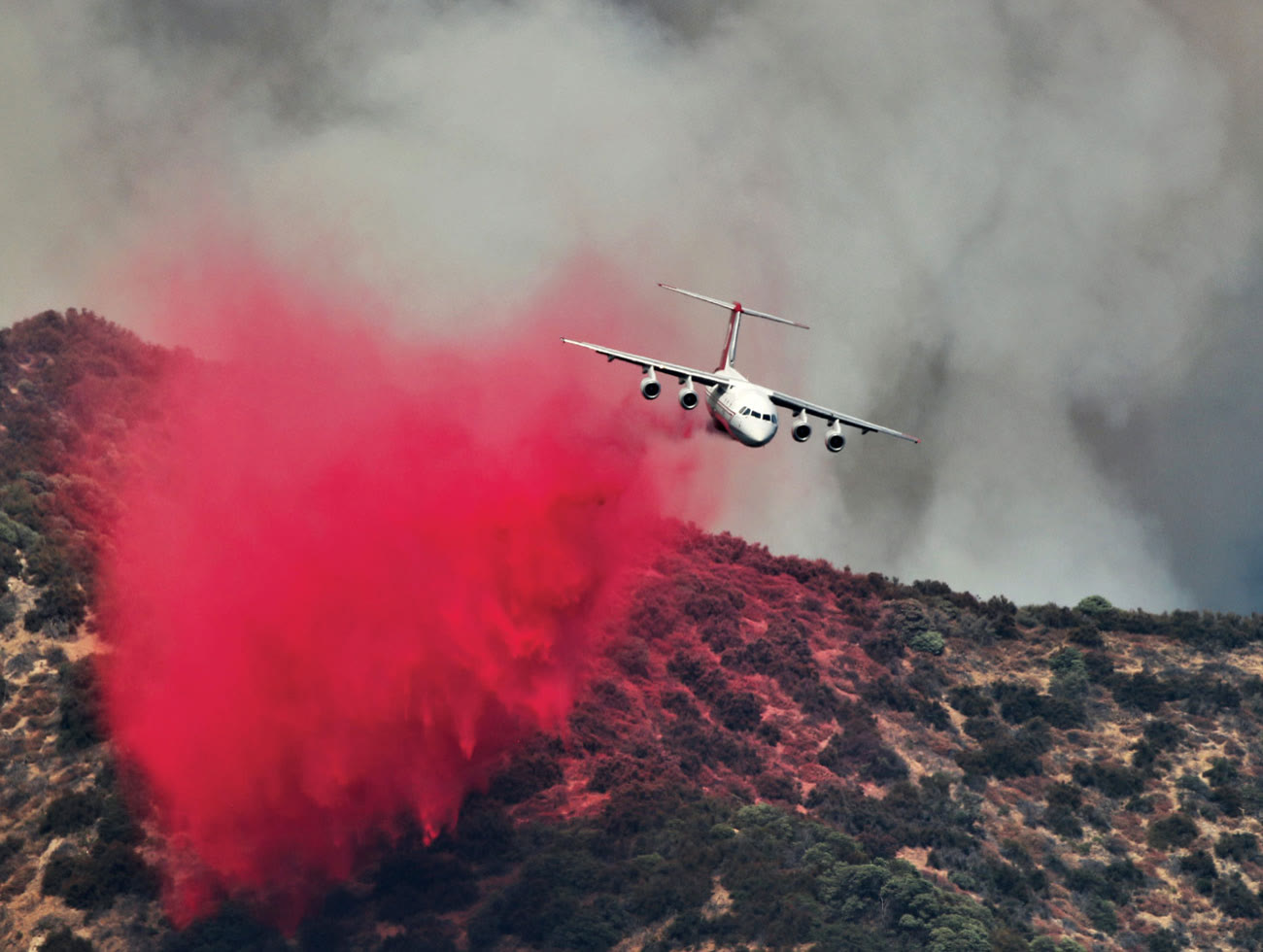
Four-engine aerial tanker releasing a large red fire-retardant cloud over a smoky hillside
FIG 10Conventional aerial retardant: large red ammonium-polyphosphate-style dump over a hillside. Chemistry and delivery waste in one image.

The Solution

The agent

Ecofire

Ecofire is the agent. Per Ecofire certification data, one liter replaces about fifty liters of water, the film holds through 1,500°C, the residue is edible, and the listing covers Class A, B, and C fires. Those figures are Ecofire's, not mine. What I needed was an agent that does not leave a poison on the ground after the fire is out.

Ecofire vs Phos-Chek family · agent claims as certified
FactorEcofirePhos-Chek / APP
Residue / toxicityEdible residue, per Ecofire certification dataToxic and persistent; watershed and soil load. Should never be used.
Water equivalence~50× water by volume, per Ecofire certification dataWater-like dump volumes
TemperatureHolds through 1,500°C, per Ecofire certification dataCoating / intumescent, not that rating
Fire classClass A, B, and C, per Ecofire certification dataPrimarily Class A vegetation

The delivery machine

Helioss

Helioss is the delivery machine: a helicopter-mounted ionization system. Ecofire leaves the nozzles charged, so droplets wrap fuel instead of drifting past it. An uncharged spray is a cloud the wind owns. A charged spray is a wrap: the droplet is pulled onto the surface it has to wet.

At 400 m drop height, the H1 nozzle geometry and charge model give a 1:1 meter-to-liter coverage ratio: one meter of treated line per liter of agent. Holding droplet size and height constant, that is about one-tenth the liquid of an uncharged dump for the same coverage. Those ratios come from the ionization model and H1 geometry; aerial sling-load footage confirms the machine can spray in flight; it is not a substitute for full coverage metrology. The attachment mounts on a standard helicopter hardpoint: structure, ionization electronics isolated from the airframe, pump and nozzles, and Bluetooth firmware for the operator.

Materials

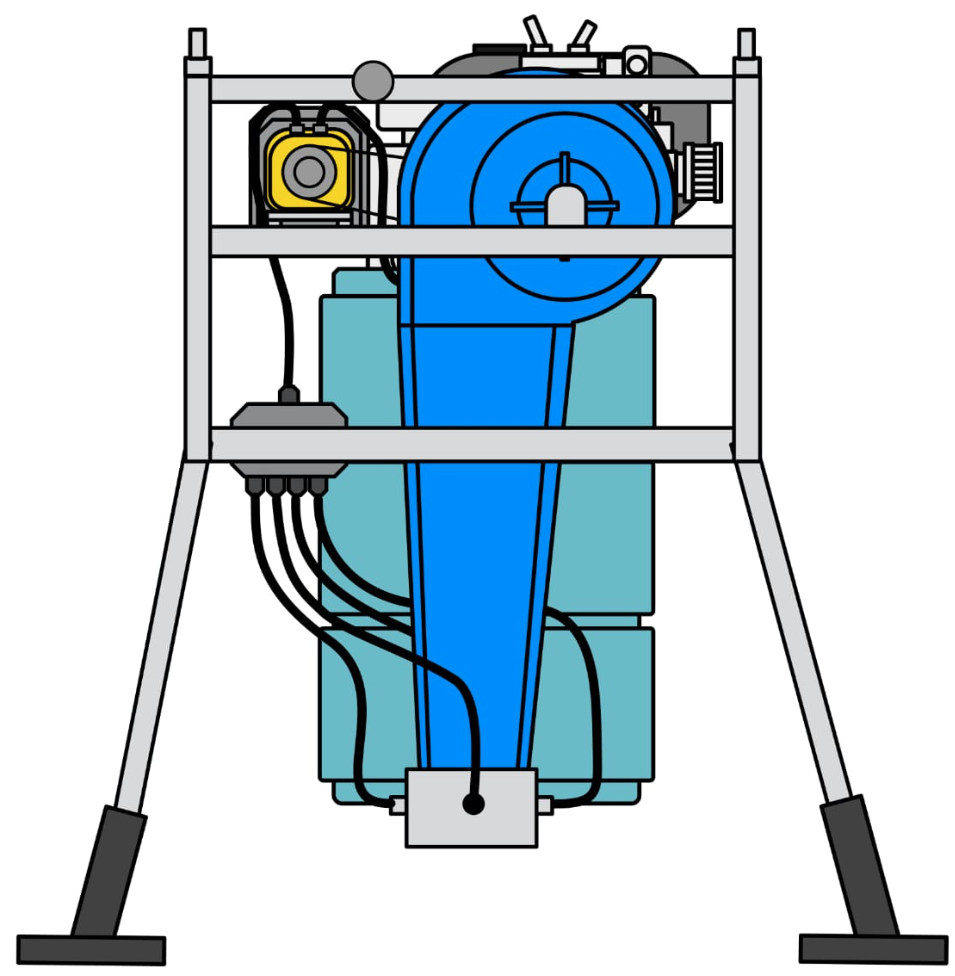
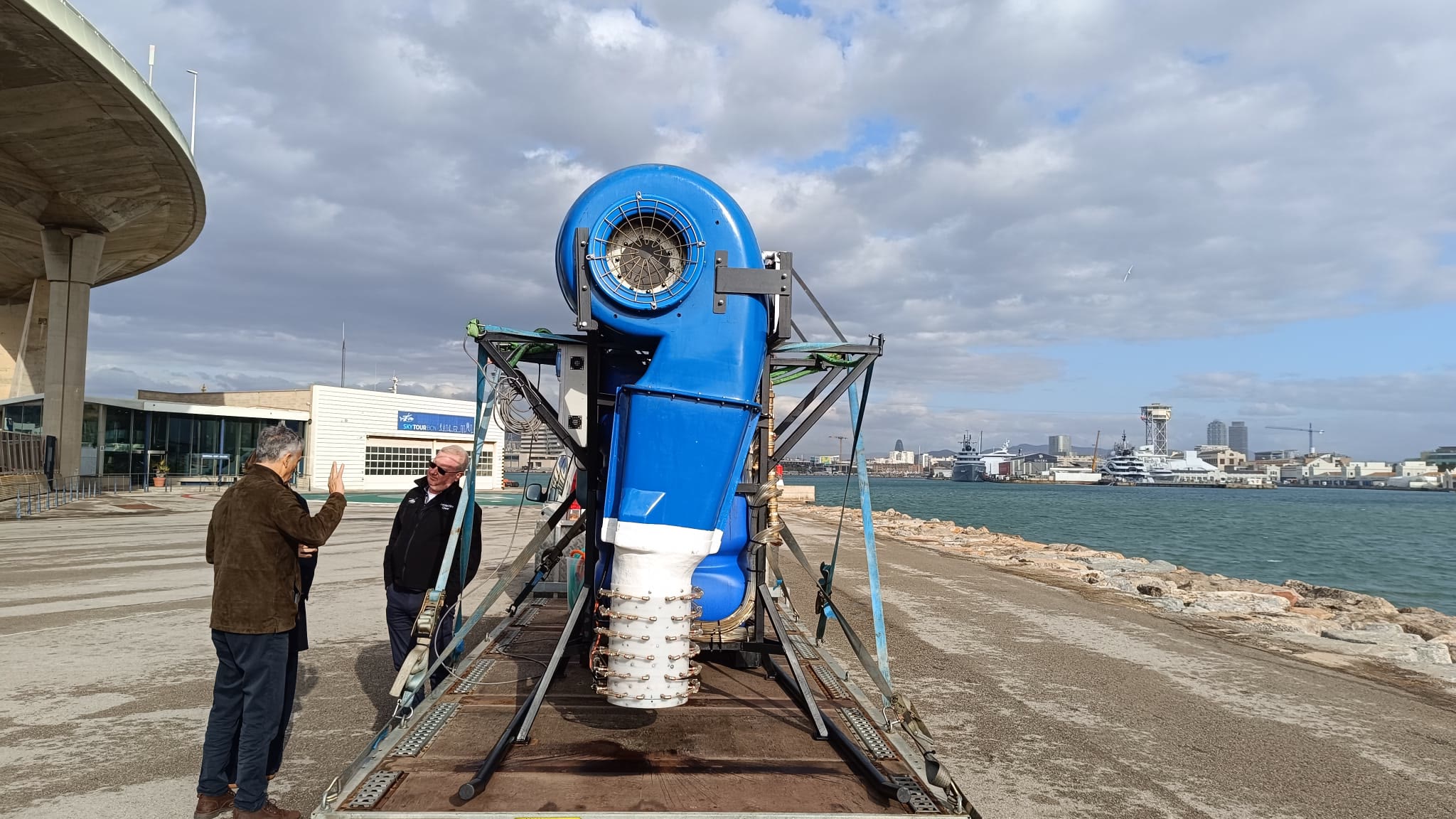
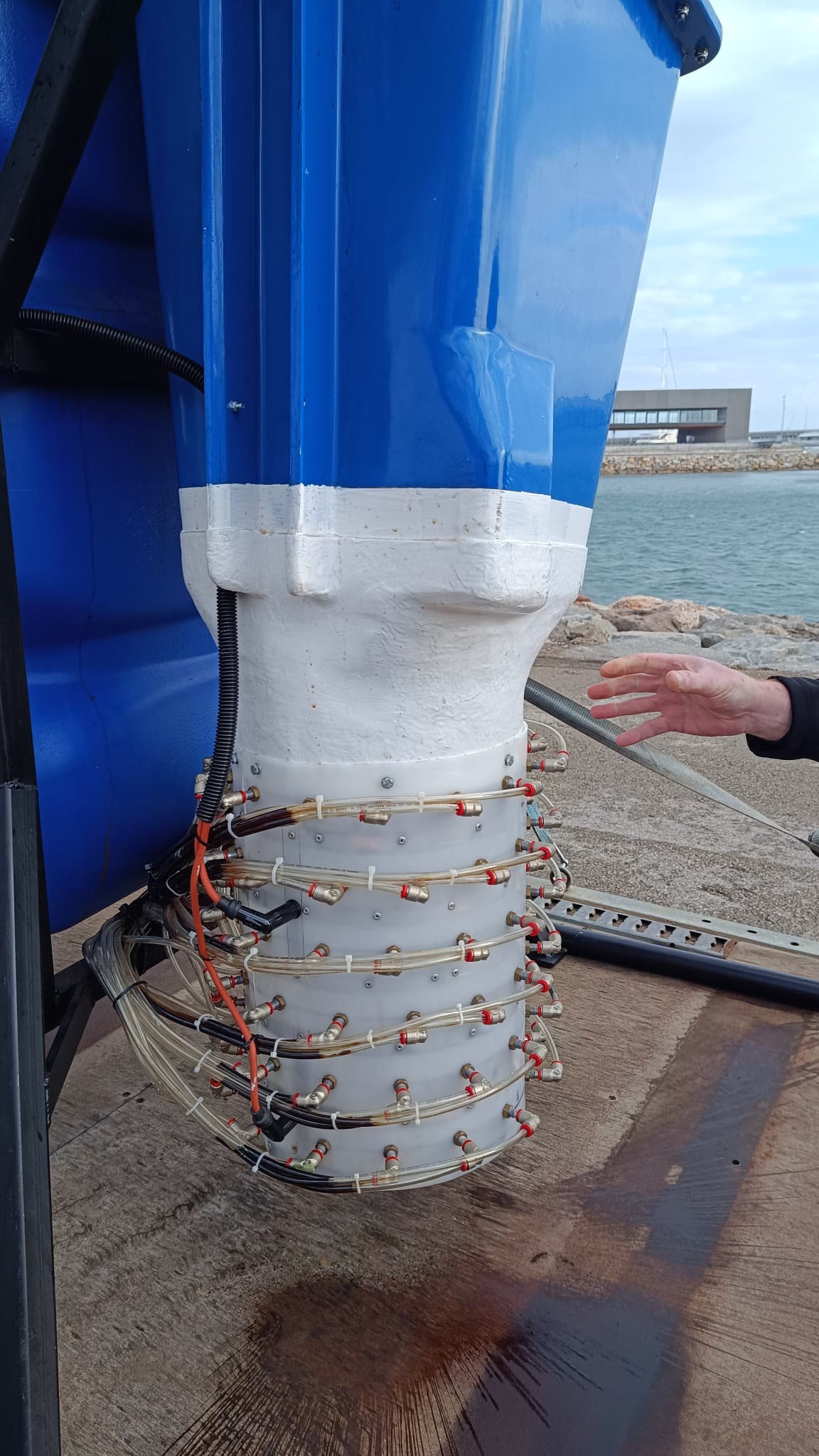
Hardware from the H1 build: system drawing, trailer prototype, and nozzle manifold.

Orthographic technical system drawing of the Helioss H1 attachment
DWG 03System drawing: structure, ionization electronics isolated from the airframe, pump, nozzles.
Helioss H1 three-quarter view on flatbed trailer at harbor
SHOT 04H1 functional prototype, three-quarter on trailer. Blue housing and intake mesh in frame.
Close-up of Helioss H1 nozzle manifold with clear tubing and amber liquid
SHOT 09Nozzle manifold and feed tubing on the H1 prototype: ground hardware, not flight kit.

Ionization

Ionization is the mechanism. Charge the spray so droplets wrap vegetation instead of drifting past it. The diagram is the whole idea in one picture.

FIG 02 · Ionization

Uncharged spray drifts; charged spray wraps fuelLeft: uncharged droplets follow a wind vector and miss a fuel block. Right: charged droplets curve onto and behind the same fuel.UNCHARGED · DRIFTFUELWIND OWNS THE CLOUDCHARGED · WRAPFUELDROPLET FOLLOWS FUEL
Uncharged droplets follow air and miss. Charged droplets wrap the fuel, including the lee side. Diagram, not a photo.

Built, tested, patented

H1 is a functional prototype. Build cost was about $136,000. Ground tests covered charge, spray pattern, pump, and control. Aerial trials followed: the unit on a helicopter sling load, spraying over canopy. That is a flight demonstration of the machine, not a wildfire incident response. A next-generation unit is designed and costed. Once the design is frozen, build is about two months. Serial production is about one unit per week.

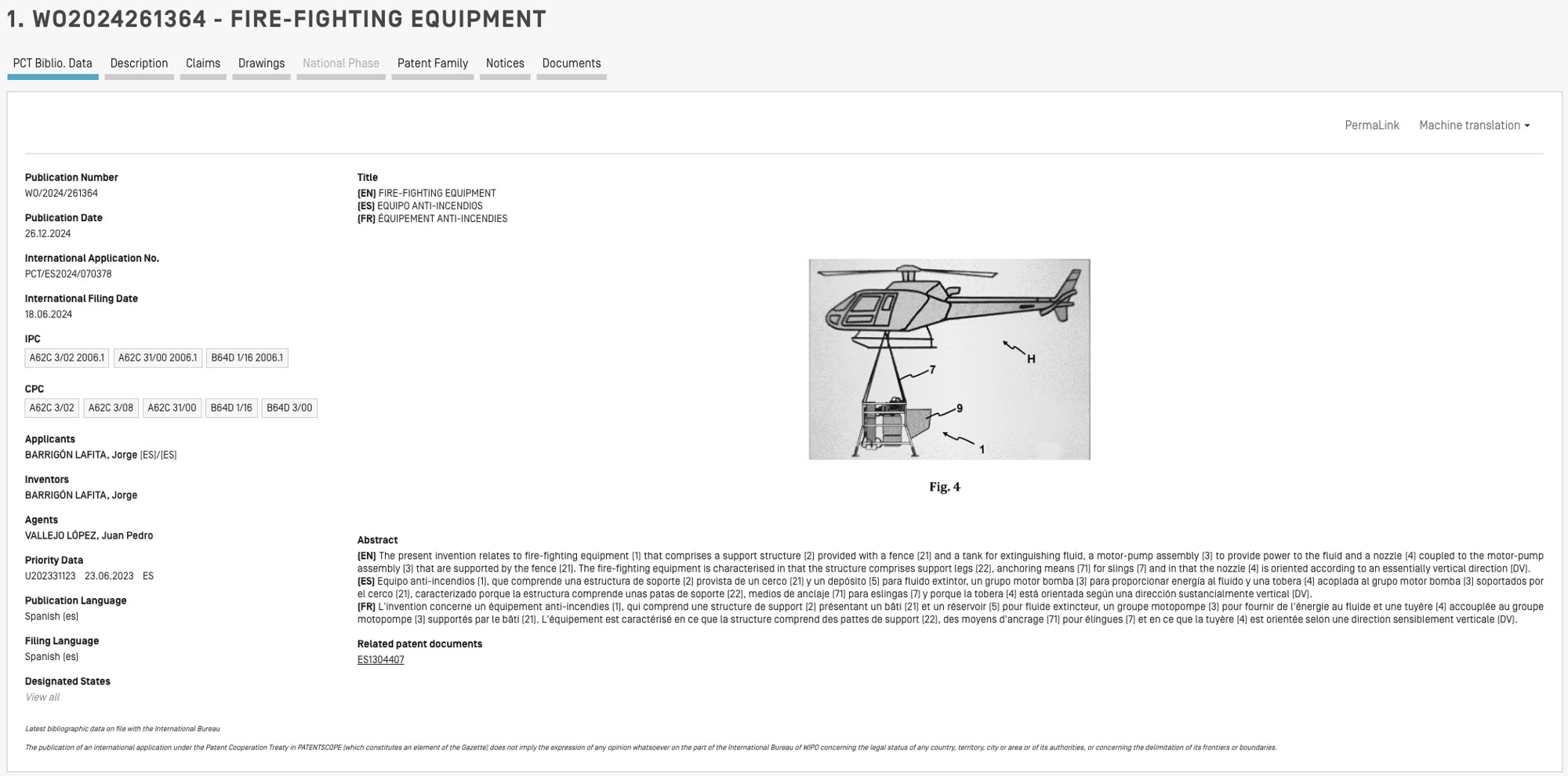
The machine is patented as WO2024/261364 A1 (PCT): the ionization attachment (structure, charge path, and control), not the agent. Separately, we hold rights to deploy Ecofire from the air. Those are two instruments. The patent covers the hardware. The aerial rights cover the chemistry in that use.

SHOT 05Aerial sling-load trial: H1 under a helicopter, spraying over canopy. Functional flight test, not a wildfire incident.
SHOT 08Ecofire agent: Class B fuel under a torch after treatment: burnback / re-ignition resistance demo. Ecofire's chemistry, not Helioss hardware.
WIPO Patentscope page for WO/2024/261364 showing Fig. 4 helicopter-slung firefighting equipment
FIG 06Patent WO2024/261364 A1 (PCT): WIPO biblio and Fig. 4, helicopter sling load of the machine.

Stage Two

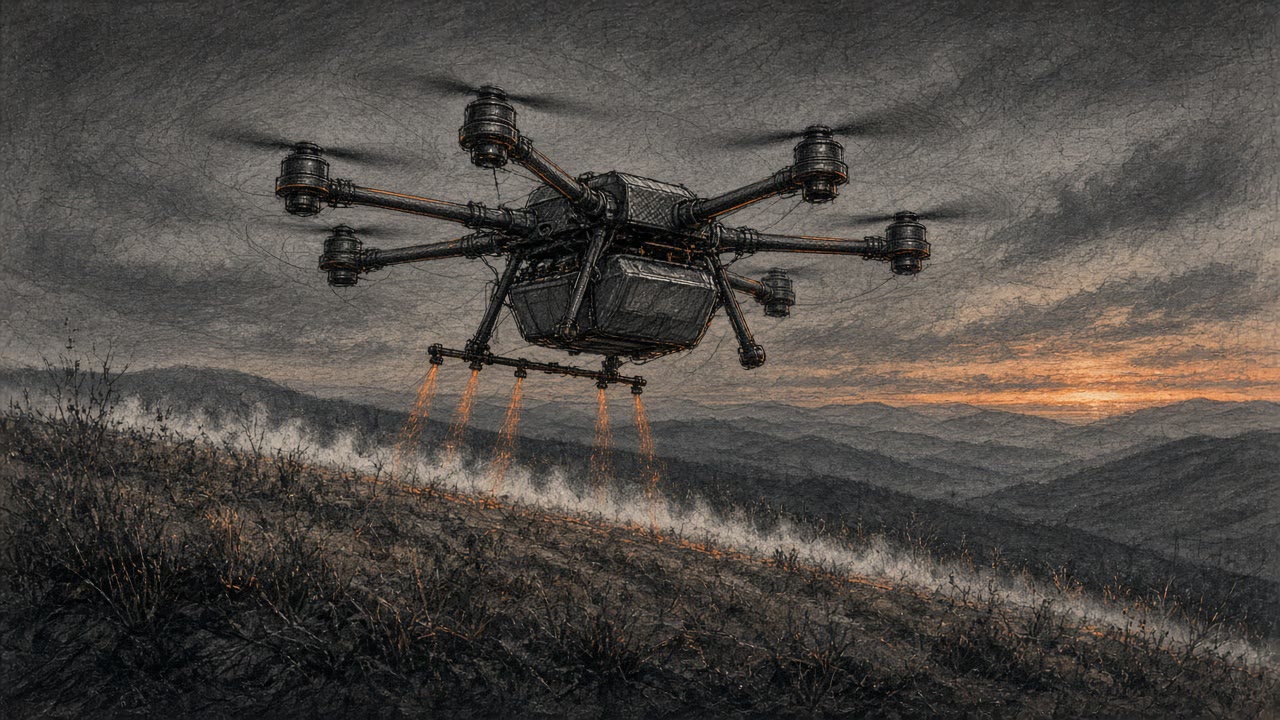
Stage two is a concept, not a flying system. The same stack (Ecofire through ionized nozzles) on autonomous drones. The job is to lay a treated line ahead of a fire: a firewall, before crews can get there.

Helicopters remain the stage-one platform. Drones are how you reach more starts, earlier, without waiting for a ship. I am at Carnegie Mellon to build robotic systems that do this class of physical work.

Concept sketch of a heavy multirotor drone spraying a treated firewall line on a ridgeline at dusk
SK 07Stage two concept sketch: autonomous drone laying a treated line along a ridge. Concept only, not a flying product.

Contact

Wildfire agencies, utilities, insurers, aerial operators, and people building autonomous field robotics: this is the conversation I want.

Back to notebook/Lab notes